

Turkmenistan History, Language and Culture
History of Turkmenistan
The history of Turkmenistan stretches back thousands of years, shaped by its position at the crossroads of Central Asia. Ancient civilisations flourished here long before recorded history, supported by oasis settlements along early trade routes. From the Bronze Age cultures of Margiana to later Persian influence, the region played a quiet but important role in the development of Central Asian civilisation.
From antiquity, Turkmenistan became part of the wider Silk Road network, linking China, the Middle East, and Europe. Cities such as Merv grew into major centres of trade, learning, and culture, attracting merchants, scholars, and conquerors alike. Over the centuries, the area passed through the hands of empires including the Achaemenids, Parthians, and Sasanians, before the arrival of Arab armies in the 7th century, which introduced Islam and the religion remains central to cultural life today.
The medieval period saw cycles of prosperity and destruction, most notably during the Mongol invasions, which devastated many Silk Road cities. Later, Turkmen tribes gradually settled across the region, maintaining a strong nomadic identity based on pastoral life, tribal structures, and distinctive traditions that continue to influence society.
In the late 19th century, the region was absorbed into the Russian Empire and later became part of the Soviet Union. Soviet rule brought industrialisation, collectivised agriculture, and new borders that reshaped Central Asia. Following the collapse of the USSR in 1991, Turkmenistan emerged as an independent state and has since pursued a highly distinctive political and economic path.
Modern Turkmenistan blends deep historical roots with a strong emphasis on national identity and continuity. Ancient ruins stand alongside monumental modern architecture, reflecting a country that looks both far into its past and firmly towards its own vision of the future.
Did you know?
• Ancient Merv was once one of the largest cities in the world, rivalling Baghdad and Constantinople at its height during the medieval period.
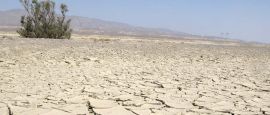
• Turkmenistan is home to one of Central Asia's oldest desert research areas, where scientists have studied extreme desert ecosystems for nearly a century.
• Traditional Turkmen carpet patterns are not decorative alone; each major tribe has its own distinct design, and these patterns are so culturally significant that they appear on the national flag.
Language in Turkmenistan
Turkmen is the official language of Turkmenistan and is used in government, education, media, and daily life. It belongs to the Turkic language family and is written using a Latin-based alphabet. Visitors will encounter Turkmen on road signs, official documents, and in most public settings.
Russian remains widely understood, particularly among older generations and in urban areas. It continues to function as a common language for business, administration, and interethnic communication, and visitors may find it easier to communicate in Russian than in English.
English is not widely spoken and is generally limited to staff in major hotels, some tour operators, and official or internationally connected institutions in Ashgabat. Outside the capital, English-language communication can be very limited, and travellers should not expect widespread understanding.



 You know where