

Getting around Turkmenistan
Domestic air travel is one of the most practical ways to cover long distances within Turkmenistan, given the country's vast size and desert geography. Flights are generally reliable and relatively inexpensive.
Domestic services are operated by the national carrier, Turkmenistan Airlines, which runs regular flights from the capital to major regional centres. Ashgabat (ASB) serves as the main hub, with scheduled connections to cities such as Turkmenbashi (KRW) on the Caspian coast, Mary (MYP) near the ancient ruins of Merv, Dashoguz (TAZ) in the north, and Turkmenabat (CRZ) in the east. Flights are typically short, often under two hours, and aircraft are modern and well-maintained.
Travelling by road is one of the most common ways to get around Turkmenistan. A network of main roads links Ashgabat with major regional centres such as Turkmenbashi, Mary, Dashoguz, and Turkmenabat, cutting across desert landscapes and sparsely populated areas.
Fuel stations are available along major routes and around cities, though they can be widely spaced in remote regions. Petrol prices are generally low by international standards. Road signage is mostly in Turkmen, with limited English, and navigation apps may be unreliable outside urban areas, making advance planning important.
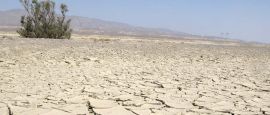
The route from Ashgabat to Darvaza is worth a mention. It cuts deep into the Karakum Desert and offers a stark, cinematic landscape of shifting sands, open horizons, and near-total emptiness. The journey itself is part of the experience, especially at sunset when the desert colours soften, before reaching the dramatic Darvaza Gas Crater.
Another scenic route from Ashgabat leads west to Turkmenbashi. This drive passes through the Balkan Mountains and arid steppe, with changing scenery that contrasts sharply with the capital's white-marble formality. The approach to Turkmenbashi offers coastal landscapes and wide views of the Caspian Sea, making it one of the most visually varied drives in the country.
Road quality in Turkmenistan varies considerably. Major highways connecting Ashgabat with other large cities are generally in good condition, with wide lanes and relatively light traffic. In contrast, secondary roads and rural routes may have uneven surfaces, potholes, or limited lighting at night.
Desert conditions can also affect driving, particularly during dust storms or extreme heat. Night driving outside cities is not recommended due to livestock on roads, limited signage, and poor visibility.
Turkmenistan's road network is broadly divided into international highways, national roads, and regional routes. International highways form part of the Asian Highway (AH) and European E-road networks, carrying transit traffic across the country and linking Turkmenistan with neighbouring states.
National roads, often referred to as magistral routes (M), are the main long-distance arteries within the country. These high-capacity roads connect major cities such as Ashgabat, Turkmenbashi, Mary, Dashoguz, and Turkmenabat, and are generally the best-maintained.
Below this level are regional and interregional roads, which link provinces (welayats) and districts. Roads classified as "A" routes usually serve as important regional connections and are suitable for regular motor traffic, while "P" routes tend to be more local in nature and may vary significantly in surface quality and maintenance.
Car hire options are limited and generally arranged through hotels or local travel agencies rather than international rental brands. Self-drive hire is uncommon for visitors, and many rentals include a local driver.
Vehicles are typically modern and suitable for long-distance travel. Also, advance arrangements are strongly recommended.
Taxis are widely available in cities, especially in Ashgabat. Most are unmetered, and fares should be agreed upon before starting the journey. Prices are generally low, but English is not widely spoken, so having destinations written down can be helpful.
While most taxi arrangements in Turkmenistan are made by phone, through hotels, or by flagging vehicles on the street, app-based ride-hailing services are emerging, especially in Ashgabat. Onlaýn taksi and Ynamly taksi are two popular ones.
Cycling is uncommon as a form of long-distance transport in Turkmenistan. Long distances, extreme heat, heavy urban traffic, and limited cycling infrastructure make cycling challenging. That said, short recreational cycling is possible in parts of Ashgabat, where wide boulevards and parks provide space for leisure riding.
Long-distance coach travel in Turkmenistan provides a reliable and relatively comfortable way to travel between major cities. Regular services link Ashgabat with destinations such as Turkmenbashi, Mary, Turkmenabat, and the Avaza tourist zone on the Caspian coast. Most long-distance services operate from the modern International Passenger Bus Terminal located in the northern part of the capital.
Intercity buses are generally modern and well-maintained, with many routes served by long-distance coaches designed for comfort on extended journeys. Travel times can be lengthy due to the distances involved, with major routes typically taking 7 to 8 hours. Departures on key routes usually run daily, often early in the morning at around 6 am.
Tickets can be booked in advance via the official website or mobile app of the state road transport authority, though availability and online access may vary. Tickets are also sold at bus terminals. While English-language information is limited, staff are generally accustomed to assisting passengers at major terminals.
Driving is on the right-hand side. Speed limits are generally around 60 km/h (37 mph) in urban areas, 90 km/h (56 mph) on open roads, and up to 110 km/h (68 mph) on newer highways, though limits may vary and are strictly enforced.
Drink driving laws are strict, with a zero-tolerance approach. Seat belts are compulsory, and police checkpoints are common. Visitors should carry identification at all times when driving.
Formal roadside assistance services are limited, particularly outside major cities. In urban areas, help can usually be arranged through hotels, car hire companies, or local contacts.
When travelling long distances, it is advisable to carry water, basic tools, and a charged mobile phone, as assistance in remote desert areas may take time to arrive.
Foreign drivers must carry a valid driving licence from their home country. An International Driving Permit is strongly recommended and may be required by local authorities.
Drivers should also carry their passport, visa, and vehicle documents at all times. Police checks are frequent, and failure to produce documentation can result in fines or delays.
Within cities, people mainly get around using buses, minibuses, taxis, and private cars. Ashgabat, in particular, has wide roads and organised traffic flow, making road-based transport the dominant mode of movement.
Public buses are inexpensive but can be difficult for visitors to use due to limited route information in English. Walking is feasible in central areas, though distances can be deceptively large.
Turkmenistan has an extensive rail network operated by Turkmenistan Railways, linking Ashgabat with major cities such as Turkmenbashi, Mary, Dashoguz, and Turkmenabat. Trains are widely used for long-distance travel and are generally affordable.
While rail travel is slower than flying, it remains a practical option for those with time and an interest in seeing the countryside. Timetables and ticketing information can be limited in English, and tickets are usually purchased locally.
Do you have any Feedback about this page?
© 2026 Columbus Travel Media Ltd. All rights reserved. No part of this site may be reproduced without our written permission, click here for information on Columbus Content Solutions.



 You know where