

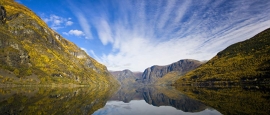


Above the Arctic Circle, Abisko National Park is celebrated for its rugged mountains, clear lakes and expansive northern skies. Winter brings opportunities to witness the northern lights, while summer offers the midnight sun and excellent hiking conditions. The famous Kungsleden walking trail begins here, passing through birch forests and dramatic mountain valleys.
Book and Go

Latest features
Sweden things to see and do
Abisko National Park
Åre and the Swedish Mountains
Surrounded by the mountains of Jämtland, Åre is Sweden's best-known alpine resort, attracting skiers and snowboarders throughout winter. In summer, the slopes and valleys become a setting for hiking, mountain biking and outdoor adventures. Its lively village offers restaurants, cafés and accommodation throughout the year.
Bohuslän Coast
Smooth granite cliffs, colourful boathouses and fishing harbours give the Bohuslän coast its distinctive charm. Seaside communities such as Smögen, Fjällbacka and Lysekil offer waterfront restaurants, boat trips and kayaking. Further north, the Koster Islands provide quiet beaches and access to Kosterhavet National Park, Sweden's first marine national park.
Dalarna and Lake Siljan
Red-painted cottages, flower-filled meadows and lakeside villages make Dalarna a symbol of traditional Swedish rural life. Around Lake Siljan, towns such as Rättvik, Leksand and Mora are known for folk music, handicrafts and Midsummer celebrations. The region is also the home of the brightly painted wooden Dala horse.
Drottningholm Palace
Set beside Lake Mälaren, Drottningholm Palace is a UNESCO World Heritage Site and a residence of the Swedish royal family. Its elegant interiors and formal gardens reflect centuries of royal history. The estate also contains a beautifully preserved 18th-century court theatre and the Chinese Pavilion, making it a rewarding excursion from Stockholm.
Gammelstad Church Town
Hundreds of traditional wooden cottages surround a medieval stone church at Gammelstad, near Luleå. This UNESCO World Heritage Site preserves a distinctive northern tradition, when distant worshippers stayed overnight to attend church services. Its narrow lanes and historic buildings offer a fascinating glimpse into Sweden's religious and social history.
Gothenburg
Sweden's second-largest city has a relaxed maritime character, shaped by canals, a busy harbour and lively neighbourhoods. The historic Haga district is known for its wooden houses, independent shops and cafés serving cinnamon buns. Visitors can also explore art museums, enjoy Liseberg amusement park or take ferries to the nearby archipelago.
Gotland and Visby
The Baltic island of Gotland is celebrated for its medieval heritage, limestone landscapes and rugged coastline. Its capital, Visby, is a UNESCO World Heritage Site, with remarkably intact medieval walls, narrow lanes and historic merchant houses. Beyond the town lie fishing villages, windswept beaches and dramatic limestone sea stacks, especially on nearby Fårö.
High Coast
Dramatic forested hills, rocky islands and sheltered bays define the High Coast along the Gulf of Bothnia. This UNESCO World Heritage Site is renowned for its exceptional land uplift following the last Ice Age. Hiking trails through Skuleskogen National Park reveal spectacular coastal views, while nearby fishing villages offer a quieter experience.
Jokkmokk and Sámi Culture
Jokkmokk, just north of the Arctic Circle, is an important centre of Sámi culture. Its Ájtte Museum introduces visitors to Sámi history, traditions and the northern environment. The town is especially known for its centuries-old winter market, which brings together traditional crafts, local food and cultural events.
Kalmar Castle and Öland
Overlooking the harbour, Kalmar Castle is an impressive Renaissance fortress associated with centuries of Scandinavian royal history. Its towers, grand halls and exhibitions reveal the region's political past. Across the nearby bridge, Öland offers windmills, beaches and ancient burial grounds, as well as the UNESCO-listed agricultural landscape of southern Öland.
Kiruna and the Icehotel
Kiruna, Sweden's northernmost city, is a gateway to Arctic landscapes and a community undergoing an extraordinary relocation because of nearby mining operations. Visitors can learn about its industrial heritage and explore the surrounding wilderness. In nearby Jukkasjärvi, the famous Icehotel features intricately carved ice rooms and sculptures.
Laponia and Sarek National Park
Vast mountains, glacial valleys and ancient forests make Laponia one of Sweden's most remarkable wilderness regions. This UNESCO World Heritage Site is also a living Sámi cultural landscape shaped by generations of reindeer herding. Within it, Sarek National Park attracts experienced hikers with its remote peaks and demanding, largely unmarked routes.
Malmö and Lund
Malmö combines historic squares and cobbled streets with striking contemporary architecture, including the twisting Turning Torso skyscraper. Its parks, cafés and multicultural food scene create a lively atmosphere, while the Öresund Bridge connects the city with Copenhagen. Nearby Lund is celebrated for its medieval cathedral, historic university and attractive old town.
Stockholm and Gamla Stan
Spread across islands where Lake Mälaren meets the Baltic Sea, Stockholm combines grand waterfront architecture with a beautifully preserved historic centre. Gamla Stan, the Old Town, is a maze of cobbled lanes, colourful merchant houses and medieval squares. Highlights include the Royal Palace, Storkyrkan Cathedral and the city's many waterfront museums.
Stockholm Archipelago
Thousands of islands and rocky islets stretch eastwards from Stockholm into the Baltic Sea, forming a landscape of sheltered bays, pine forests and fishing villages. Ferries connect islands such as Vaxholm, Grinda and Sandhamn, where visitors can enjoy coastal walks, swimming and waterside restaurants. Summer's long daylight hours are ideal for island-hopping.
Stockholm's Museums and Djurgården
The leafy island of Djurgården houses some of Stockholm's finest attractions. The Vasa Museum displays a remarkably preserved 17th-century warship, while Skansen recreates traditional Swedish life through historic buildings and cultural displays. ABBA The Museum celebrates the country's famous pop group, and the island's parkland provides a pleasant setting for walking.
Uppsala
Uppsala is dominated by its magnificent Gothic cathedral, the largest church in Scandinavia. The city is also home to Uppsala University, founded in 1477, with historic buildings and botanical gardens reflecting its scholarly traditions. Nearby Gamla Uppsala preserves ancient burial mounds associated with Sweden's early rulers.
Ystad and Österlen
Half-timbered houses, cobbled streets and a peaceful coastal setting make Ystad one of southern Sweden's most atmospheric towns. It is also associated with the fictional detective Kurt Wallander. To the east, Österlen is known for its rolling farmland, artists' studios, fishing villages and sandy beaches, particularly around Sandhammaren and Stenshuvud National Park.
Do you have any Feedback about this page?
© 2026 Columbus Travel Media Ltd. All rights reserved. No part of this site may be reproduced without our written permission, click here for information on Columbus Content Solutions.



 You know where