Before you travel
No travel can be guaranteed safe. Read all the advice in this guide. You may also find it helpful to:
Travel insurance
If you choose to travel, research your destinations and get appropriate travel insurance. Insurance should cover your itinerary, planned activities and expenses in an emergency.
About FCDO travel advice
The Foreign, Commonwealth & Development Office (FCDO) provides advice about risks of travel to help you make informed decisions. Find out more about FCDO travel advice.
Get travel advice updates
Sign up to get email notifications when this travel advice is updated.
Follow FCDO:
This information is for people travelling on a full ‘British citizen’ passport from the UK. It is based on the UK government’s understanding of El Salvador’s current rules for the most common types of travel.
The authorities in El Salvador set and enforce entry rules. If you’re not sure how these requirements apply to you, contact the Salvadoran Embassy in the UK.
Passport validity requirements
To enter El Salvador, your passport must have an ‘expiry date’ at least 6 months after the day you arrive.
Check with your travel provider that your passport and other travel documents meet requirements. Renew your passport if you need to.
You will be denied entry if you do not have a valid travel document or try to use a passport that has been reported lost or stolen.
Dual nationals
When returning to the UK, British citizens must carry a valid British passport or certificate of entitlement. See Dual citizenship.
Visa requirements
You can travel to El Salvador for tourism or business for up to 180 days without a visa.
You can extend your stay by contacting the General Directorate of Migration and Immigration.
To stay longer (to work or study, for business travel or for other reasons), you must meet the Salvadoran government’s entry requirements. Check which type of visa or work permit you need with the Salvadoran Embassy in the UK.
If you overstay your visa, you may have to pay a fine before leaving the country.
Applying for a visa
If you need a visa, contact the Salvadoran Embassy in the UK.
Travelling between El Salvador, Guatemala, Honduras and Nicaragua
You can travel between El Salvador, Guatemala, and Nicaragua for up to 90 days without a visa. The CA-4 Agreement also includes Honduras, however British Nationals must have a visa to visit Honduras. If you’re entering Honduras, read the entry requirements. Read the travel advice for:
The 90-day period starts when you enter any of these countries and does not restart when you cross borders. You’ll have to go through immigration checks at borders.
If you’re expelled from one of these countries, you’re also excluded from the other 3. If you overstay, you may get a fine.
Vaccine requirements
To enter El Salvador, you must have a certificate to prove you’ve had a yellow fever vaccination if you’re coming from a country listed as a transmission risk.
For full details about medical entry requirements and recommended vaccinations, see TravelHealthPro’s El Salvador guide.
Customs rules
There are strict rules about goods you can take into or out of El Salvador. You must declare anything that may be prohibited or subject to tax or duty.
Taking money into El Salvador
Declare cash or travellers cheques if the value is 10,000 US dollars or more.
Transit fee for Indian and African nationals
Indian nationals or nationals from any African country travelling through El Salvador must pay a 1,130 US dollar fee. See transit fee for Indian and African nationals.
British dual nationals will not have to pay the fee if they travel on their British passport.
Terrorism
There is a high threat of terrorist attack globally affecting UK interests and British nationals, including from groups and individuals who view the UK and British nationals as targets. Stay aware of your surroundings at all times.
UK Counter Terrorism Policing has information and advice on staying safe and what to do in the event of a terrorist attack. Find out how to reduce your risk from terrorism while abroad.
Terrorism in El Salvador
Although there’s no recent history of terrorism in El Salvador, attacks cannot be ruled out.
Political situation
Avoid demonstrations and do not engage in any political activity.
It’s illegal for foreign nationals to engage in political activities such as public demonstrations in El Salvador. If you participate in demonstrations, you may be detained and deported. Avoid large gatherings or demonstrations and be cautious in public areas.
Crime
Security in El Salvador has improved considerably with significant reductions in crime. However, travellers should remain cautious as the risks of violent and petty crime still exist.
State of exception (emergency)
El Salvador’s government declared a state of exception (emergency) in response to a sharp rise in gang-related murders. The state of exception started in 2022 and has remained in place since. The murder rate has fallen significantly, but the authorities are concerned the gangs could regroup.
The state of exception gives police additional powers, resulting in a much higher number of arrests, sometimes without much evidence. It also allows police to detain people for much longer before trial. Many ordinary legal safeguards have also been weakened or removed. For example, joint legal hearings for over 100 people are common.
Some embassies have struggled to get consular access to their citizens. If you’re arrested, the El Salvador government may not allow the British Embassy to give you consular assistance or make sure you receive legal representation. Mistreatment and human rights violations, sometimes resulting in death, happen in detention facilities.
Security operations and gang-related violence do not usually affect tourists and visitors. Security operations have taken place across the country, particularly in Soyapango, Ilopango, Mejicanos, San Martin and San Marcos.
In 2022 the Salvadoran Legislative Assembly designated gang members as terrorists and established harsher penalties for them. Government communications and social media posts now sometimes refer to suspected gang members as terrorists.
Robberies and violent assaults
There have been isolated attacks on tourists, including robberies, carjackings and violent assaults.
Within San Salvador, the areas of Santa Elena, San Benito and Maquilishuat have better security, as do most of the larger shopping malls.
Protecting yourself and your belongings
Avoid walking alone or on remote trails. It may be safer to travel with others or go on a tour with a reputable company. Take extra care in more deprived areas of towns and cities and those less visited by tourists. Follow local advice on where the safer areas are.
Withdraw money from ATMs in shopping centres or change money in hotels or banks. Do not withdraw a lot of money at one time or use ATMs at night or in badly lit areas.
Protect yourself by:
- keeping valuables, including your passport, in a hotel safe if possible
- being aware of pickpockets at bus stations, airports, tourist sites and on public transport
- not wearing expensive jewellery, particularly at airports, and only carrying a small amount of cash
If you’re driving, take the following precautions:
- take extra care at junctions, where armed robbers often target stationary traffic
- stick to main roads and avoid unsurfaced roads, as you’re at greater risk in remote areas with fewer police patrols
- always lock doors and keep windows closed. If you’re robbed, do not resist the attackers or take any action that puts you at greater risk
If you have questions on security, contact the El Salvador tourist police:
Telephone: +503 2224 2705
Email: info@politurelsalvador.com
Buses and taxis
Public buses (repainted old US school buses) are not safe due to petty crime. Private intercity buses are generally safer, although crime can also happen on these. Only use reputable coach companies. For shorter trips within towns and cities, take radio-dispatched, pre-booked or hotel taxis operated by reputable companies. Do not use unofficial taxis, as there remains a small risk of kidnapping.
Criminal kidnapping
The risk of kidnapping to foreigners or visitors is relatively low, however, you might wish to share your location or plans with a trusted person, particularly if taking public transport or a taxi.
Scams
Scam artists target foreign visitors and residents. Scams come in many forms and can cause great financial loss. Warn your friends and family to be sceptical if they’re asked to transfer funds to you in El Salvador. Tell them to contact you to check you’ve made this request.
Laws and cultural differences
Personal ID
The police may ask you for ID. They may detain you if they suspect you are a gang member. Always carry a copy of the photo page of your passport to prove your identity.
Money
The official currencies of El Salvador are the US dollar and bitcoin. Bitcoins may not be accepted everywhere. If you’re considering using bitcoins, make sure you understand the risks involved. Also make sure you can access US dollars if needed.
It is almost impossible to change British pounds anywhere in El Salvador, so you should bring a mixture of cash and travellers cheques in US dollars.
Many smaller restaurants, bars and shops do not accept 50 and 100 US dollar notes. You can exchange these notes at a bank. Bring smaller denominations with you if possible.
Regular ATMs and bitcoin ATMs are widely available, particularly in San Salvador and La Libertad. Tell your bank of your travel plans to avoid your card being blocked.
Crowded events
In May 2023, at least 12 people died and more than 500 were injured during a football match at the Cuscatlán Stadium, due to overcrowding. If you’re attending events in crowded places and large gatherings, follow the advice of the local authorities and maintain a high level of security awareness.
Illegal drugs and prison sentences
There are severe penalties for drug use and trafficking in El Salvador. Prisons are overcrowded and violent.
LGBT+ travellers
Same-sex marriage, civil unions and adoption are illegal in El Salvador. Although same-sex relationships are not illegal, there is limited public acceptance of them or people with diverse gender identities, and there are no laws that explicitly protect LGBT+ people from discrimination. Public displays of affection between people of the same-sex, particularly outside of San Salvador, could result in verbal and physical harassment, discrimination and potentially violence
Read more advice for LGBT+ travellers.
Landmines and unexploded weapons
There is a small risk of unexploded weapons, such as landmines, in remote areas. If you’re going off-road, take local advice and avoid such areas if warned.
Outdoor activities and adventure tourism
Swimming safety
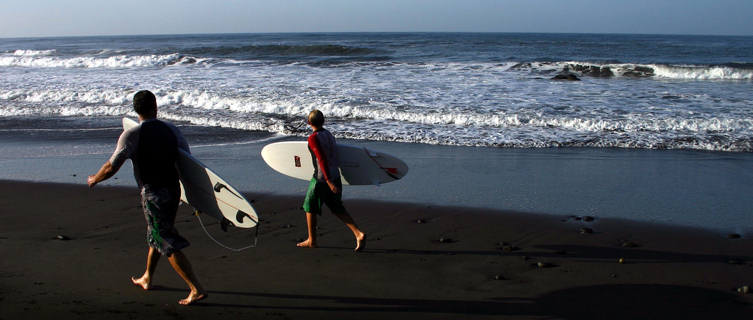
Swimming on the Pacific coast can be dangerous due to strong undertows. The currents around La Bocana de San Diego are particularly treacherous. Several people have drowned in recent years. There are very few or no lifeguards. You should avoid swimming on isolated beaches, especially after consuming alcohol.
Rivers tend to be contaminated and unsafe to swim or bathe in.
See water safety on holiday from the Royal Life Saving Society.
Transport risks
Road travel
If you are planning to drive in El Salvador, see information on driving abroad
You can use a UK photocard driving licence to drive in El Salvador for the first 90 days after you arrive. If you still have a paper driving licence, you may need to update it to a photocard licence. El Salvador does not accept the international driving permit.
After 90 days, you must get an El Salvador driving licence. Before you can apply for a licence, you must already have a temporary residency permit. You’ll need to have your UK licence certified (‘Homologación Licencia Extranjera’) as part of the application process.
Hire car companies often have stricter requirements for their customers, such as a year of driving experience or a higher minimum age.
Car insurance is essential. If you’re involved in an accident, call 911 to reach the national police or fire brigade. Wait for the police to arrive.
Driving standards
Driving standards vary. Lane discipline is poor.
Roads between the main tourist locations in El Salvador are of a good or acceptable standard. Thieves sometimes steal manhole covers, leaving large holes in the road. In more isolated locations, roads are unsurfaced and 4-wheel-drive vehicles are necessary.
Crossing borders
Take particular care when driving to or from the border with Guatemala. There have been violent attacks on vehicles, particularly on the Guatemalan side of the border. Criminals often target vehicles with El Salvador number plates. It’s better to cross borders in the morning, giving you time to reach your destination before dark. Borders sometimes close in the early evening. Private bus companies are considered safer than public buses for crossing borders.
Extreme weather and natural disasters
Find out what you can do to prepare for and respond to extreme weather and natural hazards.
Rainy season
The rainy season normally runs from June to November – the same time as the hurricane season in the Caribbean. During the rainy season you can expect frequent, heavy rain, thunderstorms and possible tropical depressions. Landslides and flooding can affect roads. Mountain areas are particularly vulnerable to landslides.
Monitor local and international weather updates from the Dirección General de Observatorio de Amenazas y Recursos Naturales (in Spanish), the World Meteorological Organization and the US National Hurricane Center.
Hurricanes
See FCDO guidance on tropical cyclones for advice about what to do if you’re caught in a hurricane.
Volcanic eruptions
El Salvador has active volcanoes, at least 6 of which are monitored.
Get local advice before climbing volcanoes in El Salvador and monitor local media for updates on increased volcanic activity. Check the Directorate General of Civil Protection for volcano warnings. It’s safer to climb volcanoes or walk in remote areas during daylight hours with a tour guide.
Earthquakes
There are frequent minor earth tremors and occasional earthquakes in El Salvador. The US Federal Emergency Management Agency website has advice about what to do before, during and after an earthquake. If you’re staying in a hotel, read their earthquake instructions.
See the Ministry of the Environment and Natural Resources for information on El Salvador earthquakes.
Tsunamis
There is a risk of tsunamis in coastal areas. See tsunamis.
Wildfires
Fire risk increases during the dry season, particularly in San Salvador. During especially hot and dry periods a single spark or flame can start a wildfire. Report fires to the emergency services immediately.
Before you travel check that:
- your destination can provide the healthcare you may need
- you have appropriate travel insurance for local treatment or unexpected medical evacuation
This is particularly important if you have a health condition or are pregnant.
Emergency medical number
Call 911 and ask for an ambulance.
Contact your insurance company quickly if you’re referred to a medical facility for treatment.
Vaccine recommendations and health risks
At least 8 weeks before your trip:
See what health risks you’ll face in El Salvador.
Altitude sickness is a risk in parts of El Salvador. Read more about altitude sickness on TravelHealthPro.
There is a risk of contaminated drinking water. Bottled water is inexpensive and widely available.
Medication
The legal status and regulation of some medicines prescribed or bought in the UK can be different in other countries. UK prescriptions cannot be used in El Salvador. To find a pharmacy (‘farmacia’) look for one of the big national chains such as Farmacia San Nicolas, Farmacias UNO or Farmacias Economicas.
Read best practice when travelling with medicines on TravelHealthPro.
Healthcare in El Salvador
Medical facilities outside San Salvador are usually basic. State-run hospitals are generally understaffed, underfunded and ill-equipped. Use private clinics and hospitals whenever possible. Some hospitals may be reluctant to treat you until they know you have medical insurance.
Make sure you have adequate travel health insurance and accessible funds to cover the cost of any medical treatment abroad and repatriation. Always carry a copy of your insurance cover. Most medical staff speak only a little English.
FCDO has a list of medical providers in El Salvador where some staff will speak English.
Travel and mental health
Read FCDO guidance on travel and mental health. There is also mental health guidance on TravelHealthPro.
The Foreign, Commonwealth & Development Office (FCDO) cannot provide tailored advice for individual trips. Read this travel advice and carry out your own research before deciding whether to travel.
Emergency services in El Salvador
Telephone: 911 (ambulance, fire, police)
Tourist police
Telephone: +503 2224 2705
Email: info@politurelsalvador.com
Contact your travel provider and insurer
Contact your travel provider and your insurer if you are involved in a serious incident or emergency abroad. They will tell you if they can help and what you need to do.
Refunds and changes to travel
For refunds or changes to travel, contact your travel provider. You may also be able to make a claim through insurance. However, insurers usually require you to talk to your travel provider first.
Find out more about changing or cancelling travel plans, including:
- where to get advice if you are in a dispute with a provider
- how to access previous versions of travel advice to support a claim
Support from FCDO
FCDO has guidance on staying safe and what to do if you need help or support abroad, including:
Contacting FCDO
Help abroad
See how to get help from the UK government abroad including in an emergency.
Help in the UK
You can call FCDO in London if you need urgent help because something has happened to a friend or relative abroad.
Telephone: 020 7008 5000 (24 hours)
Find out about call charges
Get travel advice updates
Sign up to get email notifications when this travel advice is updated.
Follow FCDO:
Risk information for British companies
The Overseas Business Risk service offers information and advice for British companies operating in El Salvador on how to manage political, economic, and business security-related risks.








 You know where